
The Hidden Cost of Holding Onto Equipment You’re Not Using
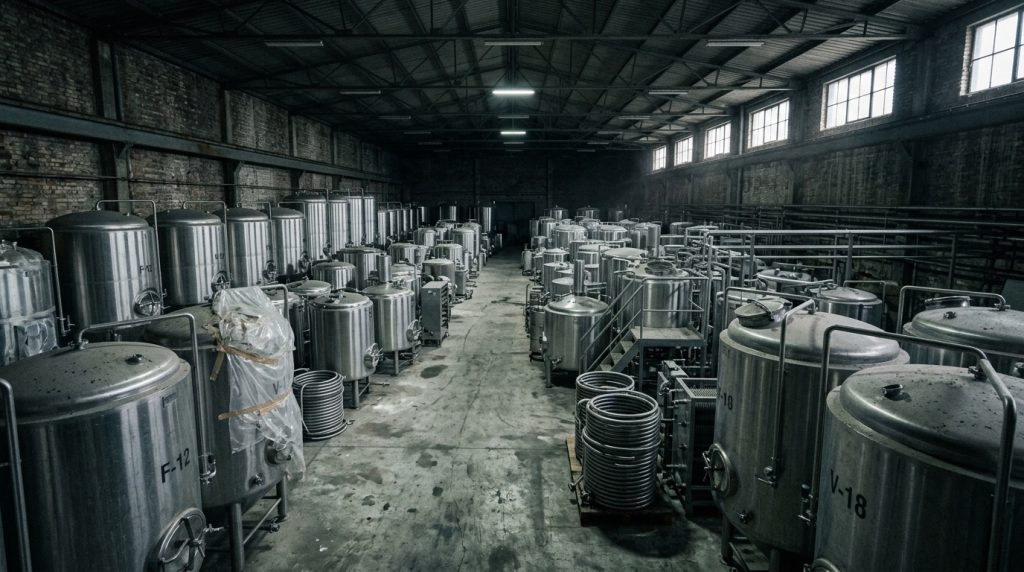
There’s a number sitting inside most brewing and food production businesses that nobody talks about.
It’s not on the P&L. It doesn’t show up in the monthly reports. But it’s there, quietly compounding in the background while the equipment it’s attached to collects dust in a corner of the warehouse.
That number is the cost of doing nothing.
Idle Equipment Is Not a Safety Net
There’s a natural instinct to hold onto machinery you’ve already paid for. It feels like security. Like optionality. Like something you might need again one day.
But that instinct is expensive.
The moment a piece of equipment stops generating output, it starts generating cost. Not always in ways that are obvious, but in ways that are real.
Space is the first one. Warehouse and production floor space costs money whether equipment is running or not. Every square metre occupied by a fermenter you haven’t touched in eighteen months is a square metre that can’t be used for something productive. In a market where operational costs are under pressure, that’s not a minor consideration.
Depreciation Doesn’t Wait for You
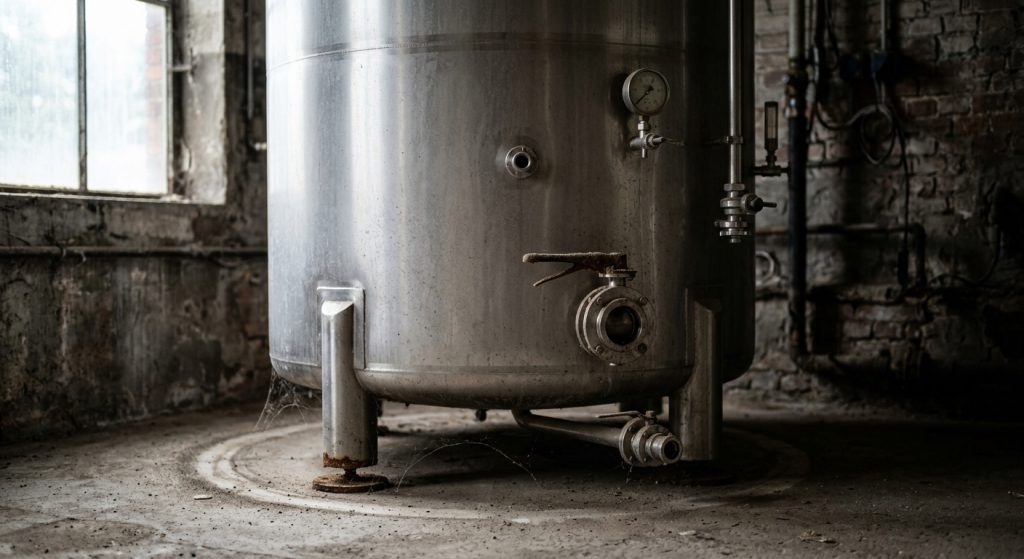
The second cost is depreciation and unlike floor space, this one is invisible until it isn’t.
Equipment that sat at a strong resale value two years ago is worth less today. Not because it’s in poor condition. Simply because time has passed, newer models have entered the market, and buyer expectations have shifted.
The window to capture the best return on idle equipment is not indefinitely open. Operators who move when the market is active consistently achieve better outcomes than those who wait until the decision is forced on them.
We’ve seen it consistently over 26 years in this industry. The equipment that sells well is rarely the equipment that had to be sold. It’s the equipment that was offered at the right time, by an operator who read the situation clearly and acted on it.
Opportunity Cost Is the One Nobody Counts
Beyond the physical costs, there’s something harder to quantify but arguably more significant.
Capital tied up in unused equipment is capital that isn’t working. It isn’t funding the next piece of kit that would actually improve throughput. It isn’t available for the operational investment that’s been sitting on the back burner. It isn’t liquid when an opportunity appears that requires a quick decision.
Idle assets don’t just cost money to hold. They limit what’s possible.
The Smarter Move
None of this is an argument for selling everything that isn’t bolted down. There are legitimate reasons to hold certain assets in reserve.
But there’s a difference between a deliberate strategic reserve and equipment that simply hasn’t been dealt with yet.
The operators who tend to come out ahead are the ones who audit their assets with the same discipline they apply to their operations. They ask the question clearly: is this equipment working for us, or are we working for it?
If the honest answer is the latter, the conversation about what to do with it becomes a lot simpler.
We’re currently working with a range of vendors who made exactly that call. In some cases the equipment had been sitting for over a year. In most cases, once listed, it moved faster than expected and the return was put straight back into the business.
If you’ve got equipment sitting idle and you’re not sure what it’s worth in the current market, it costs nothing to find out.
Talk to the Craft Brewing Solutions team — we’ll give you a straight assessment.